Understanding RPA and No-Code
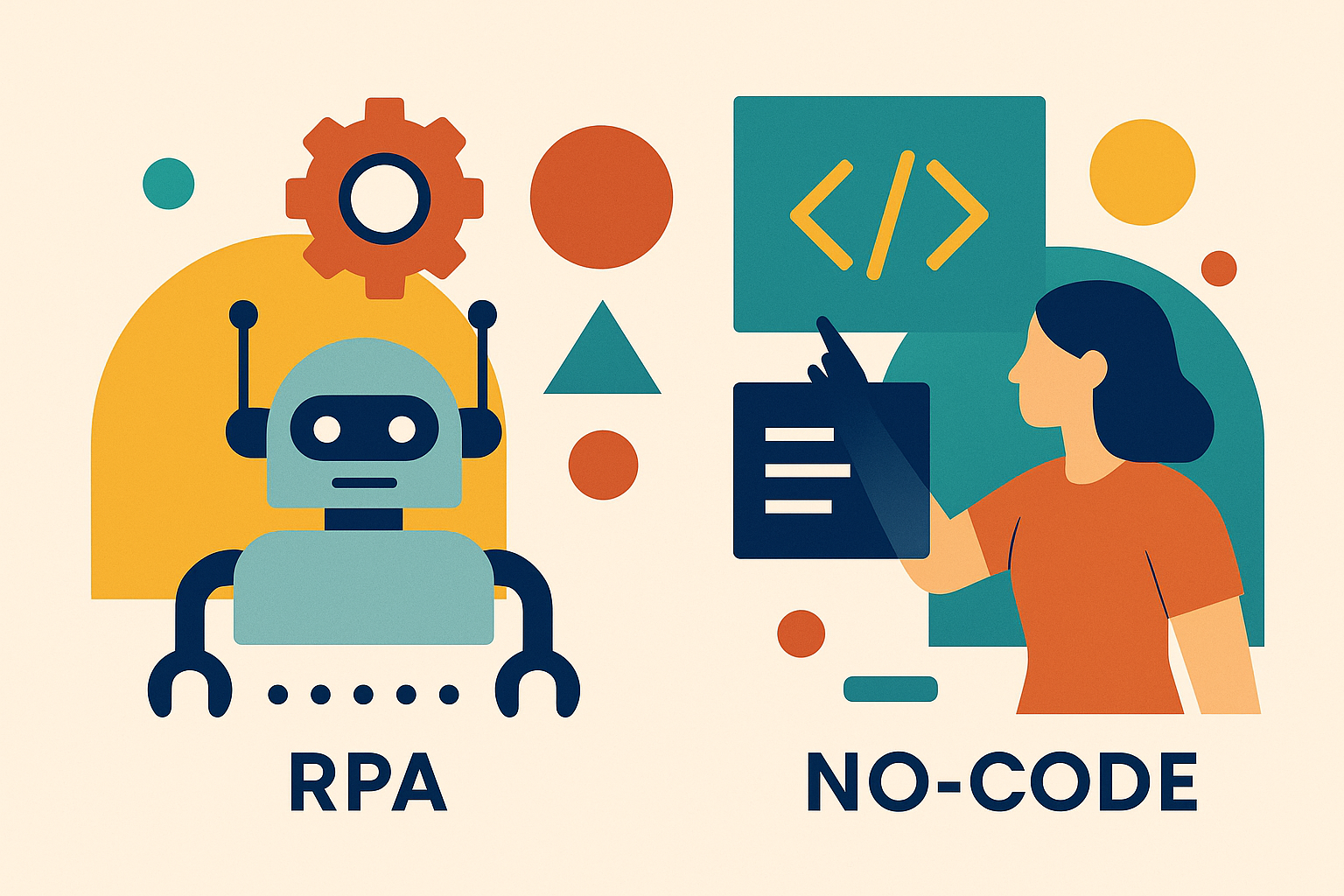
Robotic Process Automation (RPA) refers to the use of software robots to automate repetitive and rule-based tasks that are typically performed by humans. RPA tools can mimic human actions and are particularly efficient for legacy systems where coding or extensive changes are impractical. On the other hand, No-Code platforms allow users to create applications or automate processes without any programming skills. These platforms leverage visual interfaces and drag-and-drop functionality, making automation accessible to a broader audience.
Why This Matters for Businesses
As businesses seek to enhance productivity and reduce operational costs, both RPA and No-Code platforms offer unique advantages. RPA can handle high-volume, routine tasks, enabling human employees to focus on more value-added activities. In contrast, No-Code platforms democratize the development process, empowering teams to innovate and adapt quickly to changing market conditions.
Key Differences Between RPA and No-Code
Complexity and Implementation
RPA tends to be more complex in its implementation than No-Code platforms. RPA requires an understanding of the specific processes to be automated, as well as an investment in setup and maintenance. No-Code platforms, by contrast, can be deployed rapidly, as there is no requirement for extensive technical knowledge.
Use Cases for RPA
- Invoice Processing: Automating data entry and validation for invoices can significantly reduce processing time and errors.
- Customer Support: RPA can manage simple queries, leaving human agents free to tackle complex customer issues.
- Data Migration: RPA can transfer data between systems efficiently and accurately, minimizing disruption to business operations.
Use Cases for No-Code
- Internal Tools: Teams can create internal dashboards or workflow applications without relying on IT professionals.
- Marketing Automation: No-Code tools empower marketing teams to launch campaigns and analyze data independently.
- Custom Reporting: Users can generate customized reports using visual interfaces that are easy to navigate.
Practical Insights for Businesses
To choose the right automation strategy, businesses should assess their specific needs. If the goal is to automate high-volume, repetitive tasks, RPA may be the ideal solution. For organizations that require quick adaptations and low-code development, No-Code platforms offer a compelling alternative.
Conclusion
Understanding the differences between RPA and No-Code is crucial for businesses aiming to leverage automation technology. By identifying the right tools, companies can streamline processes, reduce costs, and foster innovation. Explore the options available, and consider a combination of both RPA and No-Code for a robust automation strategy.